2026
A Comparative Analysis of Acoustic and Electroglottographic Measures: Insights from Vocal Fold Vibratory Patterns
Henry Heyden
Linguistics Honors Projects 2026
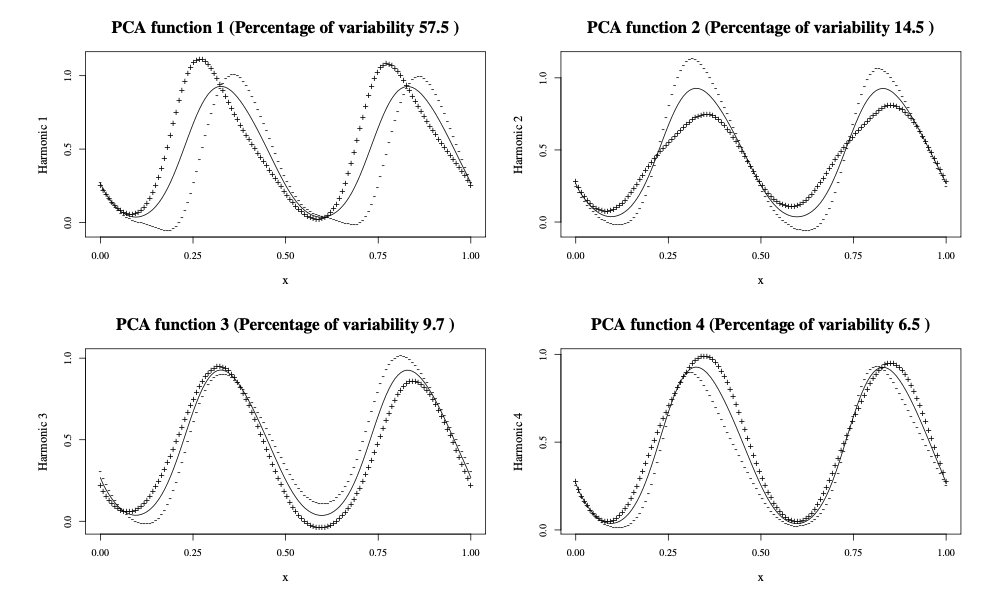
Speakers of languages with phonation contrasts produce voice qualities like "creaky" or "breathy" in different ways. In this project, I used functional principal component analysis to investigate the dominant dimensions of variation in electroglottographic data, in an attempt to further cross-linguistic understanding of non-modal phonation production.
A Comparative Analysis of Acoustic and Electroglottographic Measures: Insights from Vocal Fold Vibratory Patterns
Henry Heyden
Linguistics Honors Projects 2026
Speakers of languages with phonation contrasts produce voice qualities like "creaky" or "breathy" in different ways. In this project, I used functional principal component analysis to investigate the dominant dimensions of variation in electroglottographic data, in an attempt to further cross-linguistic understanding of non-modal phonation production.
Phonetically-Motivated Feature Engineering for Automatic Genre Classification
Capstone Project for Linguistics Major at Macalester College. 2026
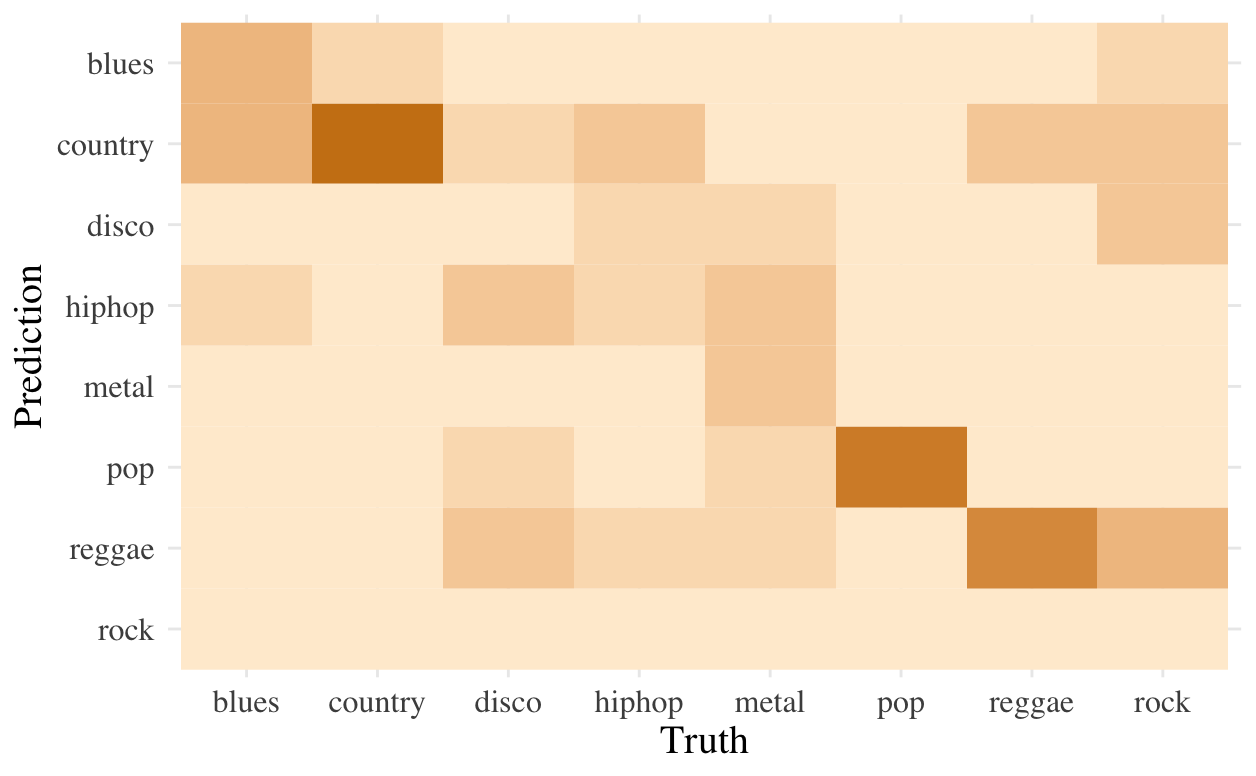
Boundaries between musical boundaries are fuzzy, but certain aspects of vocal performance can effectively index genre (e.g., vibrato in Opera or “rasp” in Country). To probe the salience of these vocal characteristics, I trained a machine learning classifier to predict the genre of a song based solely on acoustic measurements of the lead vocal. A support vector machine reached 45% accuracy on unseen data, and confusion matrices suggested that some genres had more salient voice quality characteristics than others.
Phonetically-Motivated Feature Engineering for Automatic Genre Classification
Capstone Project for Linguistics Major at Macalester College. 2026
Boundaries between musical boundaries are fuzzy, but certain aspects of vocal performance can effectively index genre (e.g., vibrato in Opera or “rasp” in Country). To probe the salience of these vocal characteristics, I trained a machine learning classifier to predict the genre of a song based solely on acoustic measurements of the lead vocal. A support vector machine reached 45% accuracy on unseen data, and confusion matrices suggested that some genres had more salient voice quality characteristics than others.
2025
A Computational Exploration of Variation in White Hmong Tonal Realization: Does Meaning Shape Tone?
Reviewers didn't love this one I fear.
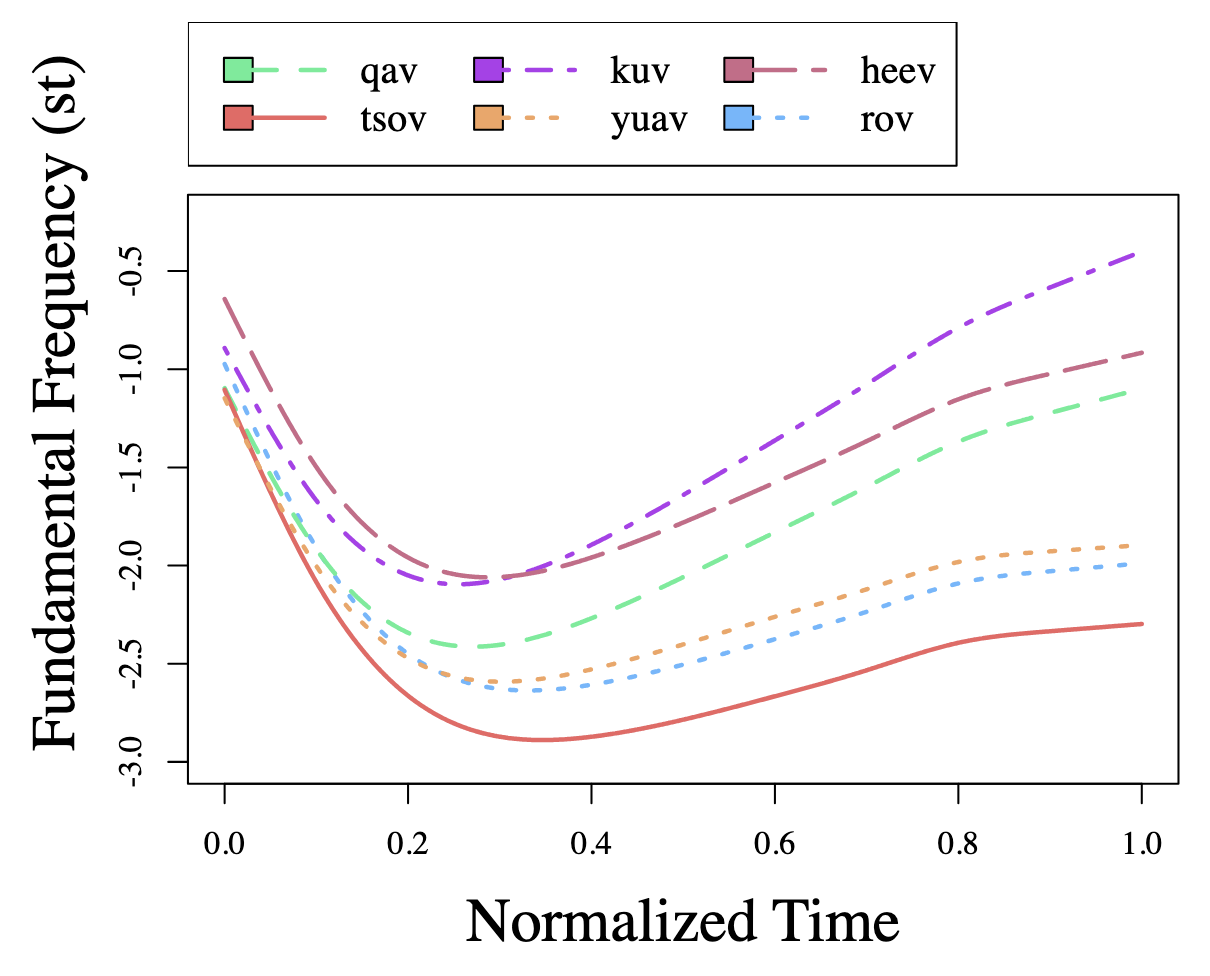
This project explored the production of tone in White Hmong, a Hmongic language spoken in Southeast Asia, as well as in the Twin Cities in Minnesota. Working alongside Zuoyu Tian (Macalester College), I used generalized additive models and neural networks to probe the effects of contextual and semantic factors on the realization of pitch within the low-rising tone. Presented at the first ever Macalester Linguistics Department Student Colloqium.
A Computational Exploration of Variation in White Hmong Tonal Realization: Does Meaning Shape Tone?
Reviewers didn't love this one I fear.
This project explored the production of tone in White Hmong, a Hmongic language spoken in Southeast Asia, as well as in the Twin Cities in Minnesota. Working alongside Zuoyu Tian (Macalester College), I used generalized additive models and neural networks to probe the effects of contextual and semantic factors on the realization of pitch within the low-rising tone. Presented at the first ever Macalester Linguistics Department Student Colloqium.